Blog Archives
Economic Crime
South Africa world leader for all the wrongs reasons:
The PwC Global Economic Crime Survey revealed on Wednesday that South African organisations had reported the highest rate of economic crime in the world over the last two years.
69% of South African organizations have been victims of economic crime
32% have been victims of cyber crime
Louis Strydom, Forensic Services Leader for PwC Africa: “When compared to the global statistic of 36%, we are faced with the stark reality that economic crime is at a pandemic level in South Africa. No sector or region is immune from economic crime”
Overall, the reports found that business detection and response plans were not keeping pace with the level and range of threats now facing organizations.
We offer comprehensive background screening services on all new employees from as little as R250.00.
It is simply not enough to do a basic credit check on a new credit applicant and assume that your company won’t have any future problems. All of the requests that we receive lately in tracing absconding debtors had clear credit records. There are a lot of fraudsters out there. We can provide you with a comprehensive verification and risk analysis report (Company/Business report as well as individual reports on 2 directors + risk analysis + verification services with South African Fraud Prevention Services, deeds information or Company Properties , CIPRO information/Linked Directors Companies, Home Affairs verification, Bank Account verification, Company Loans/Bonds, Judgements and Defaults, Company Auditors and all relevant information to make an informed lending decision).
Hijackings in Gauteng
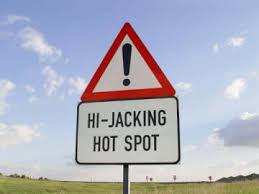
As if our economy isn’t under enough pressure; now comes the news that motor vehicle and truck hijackings are on the increase, resulting in huge losses for transporters & insurance companies.
Up to 20 motor vehicles are hijacked everyday in Gauteng (6989 reported cases in 2015) and 905 reported cases for truck hijacking with hotspots: 15.8% of total hijacked in Heidelberg and Alberton last year.
There is a number of preventative measures that fleet operators can take to reduce their risk.
Driver management, we estimate that 1 out of every 3 truck hijacks include some form of driver collusion. A more serious concern is that most companies simply do not manage or train drivers properly despite the fact that driver management should start even before the driver is hired.
It is imperative that a drivers work and personal history be properly checked prior to him being hired. In addition to licence checks, accident history and checks for criminal records (30% of the drivers we check hold some form of criminal record), employers need speak to as many of the drivers previous employees as possible to ascertain why the driver left whether he had ever been hijacked or whether or not he had financial or other problems such as drinking or taking drugs.
Potential employees should further submit to a pre-employment polygraph screening prior to being hired. It is not uncommon for professional hijacking syndicates to ‘plant’ drivers in various companies in order to perpetrate crime.
A driver that has been hijacked should be properly debriefed. We can quickly determine whether there is ANY involvement from a driver and then follow up with a polygraph test if necessary.
Polygraph Testing
We are qualified to perform the following polygraph / lie-detection tests:
Single Issue Test for:
- Theft / Fraud
- Armed Robbery
- Arson
- Assault
- Corruption
- Drug Investigations
- Child Abuse
- Sexual Harassment
- Racial Abuse
Pre-Employment Screening:
- Previous Criminal Convictions
- False certificates and documents
- Undeclared previous employment dismissal
- Previous Undetected Crimes e.g. Theft from previous employer
- Syndicate Involvement
- Narcotic Usage
- Alcohol Abuse
Periodic Testing for:
- Unidentified Criminal Activity within the Work Place
False South African Identity Documents
Identity document forgery is the process by which ID documents issued by governing bodies are copied and/or modified by persons not authorized to create such documents or engage in such modifications, for the purpose of deceiving those who would view the documents about the identity or status of the bearer. The term also encompasses the activity of acquiring identity documents from governing bodies by falsifying the required supporting documentation in order to create the desired identity.
Such falsified documents can be used for identity theft, age deception, illegal immigration and organized crime.
Detection of a “genuine fake” document is a difficult process; as such a fake is a legitimate document, it will pass any tests for forgery. To detect such fakes, it is necessary to perform a background check to confirm the legitimacy of the document’s information. Identity documents can further be examined under an ultraviolet and white light table to check for any changes made to the document.
The green bar coded South African ID has virtually no built in security features. It will take an amateur with only a couple of basic tools only a few minutes to change the document. We are uncovering numerous fake documents on a daily basis – with the impact ranging from obtaining grants that are supposed to be paid to the poor, to a false identity with which a crime is committed or illegal aliens operating as South African citizens.
We have affective solutions to combat both scenarios for much cheaper than you think!
False South African Drivers Licenses
Many professions require the employee to have a valid driver’s licence. This is necessary for insurance purposes and also to ensure that some protection and good care is given to company vehicles which those individuals may be entrusted with driving.
Failure to have a valid drivers licence is the single most quoted reason for insurance companies rejecting accident claims. South Africa has one of the highest drivers licence fraud rates in the world, with estimates of the numbers of invalid drivers licenses of over 20 percent. Out of a group of 20 people, 4 will have a false drivers license.
In fact, you can ever order a false drivers license over the internet and have it delivered to your door. See example below:
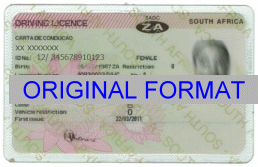
Under these circumstances, it is nothing short of recklessness not to ensure that all Drivers Licences and Professional Driving Permits in your company are validated as genuine.
Criminal Records
A considerable number of employees have previous criminal convictions.
These days the only way to check criminal records is trough the use of an AFIS system, where electronic fingerprints are taken and submitted for verification. Companies need to buy special equipment, pay licence fees, and have a Certified Biometrics officer (which has to undergo special training) at hand to take these fingerprints. A lot of smaller companies just can’t afford all these requirements.
Let us take the pain out of criminal record checks for your company.
Fast, effective and for considerably less than what you would expect!
Understanding Retail Shrinkage
Shrinkage refers to the unexplained or unauthorized loss of inventory, merchandise, cash or any other asset from a retail establishment by employee theft, shoplifting, organized retail crime, administrative errors and vendor fraud.
According to the NRA survey, most retail shrinkage is caused by employee theft, representing almost half of the losses (47 percent).
The survey also found that organized retail crime (ORC is a relatively low-risk, high-reward crime conducted by fairly sophisticated and skilled groups of criminals. The thefts usually involve specific small, high-priced items that have a high resale value on the black market, such as baby formula, coffee, steaks, cigarettes, smoking cessation products, eyeglass frames, over-the-counter health products, razor blades, fragrances, batteries, electronic goods, printer ink cartridges, power tools and athletic apparel) is on the increase, with retailers having invested little to curb the problem. Although many assume that most of a retail company’s shrinkage is the result of shoplifting, more thefts and losses from stores are internal, committed by employee’s.
 East Rand